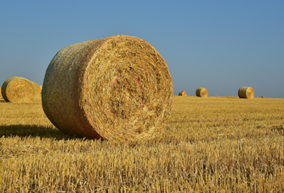
Storing round bales directly on moisture-retentive ground can create a hidden risk of bottom-bale deterioration. In parts of Western Victoria and the Atherton Tablelands, soils influenced by volcanic materials can hold significant moisture, making ground contact a concern during wet periods. Net wrap Australia products with a dense, consistent knitted structure can help protect bale integrity during handling and storage.
However, net wrap is not a substitute for proper site drainage or elevated storage. Understanding how moisture moves around the bottom of a bale helps producers reduce mould, spoilage and feed-quality losses.
Why Volcanic Soils Create Ground-Rot Risks
Ferrosol soils are strongly associated with volcanic landscapes and occur in several Australian agricultural regions, including areas of Victoria and Queensland. Their physical properties can support moisture retention, particularly where rainfall, poor drainage or compacted surfaces limit drying.
When a round bale sits directly on damp soil, moisture can remain concentrated around its lowest surface. The bale’s weight compresses the outer layers, reducing airflow and creating conditions that make mould development and feed deterioration more likely.
Net wrap Australia products can help maintain a tightly formed bale, limiting loose material and reducing opportunities for the outer layers to spread when the bale comes into contact with the ground.
How Dense Net Wrap Supports Moisture Defence
Net wrap does not make a bale waterproof from the ground up. Its main role is to contain the bale and maintain a stable outer surface, which can help reduce exposure to environmental conditions during handling and storage.
A high-density knitted net wrap can provide:
● Consistent bale coverage across the outer surface
● Strong containment to help maintain bale shape
● Reduced exposure of loose forage at the bale exterior
● A stable surface that can shed some rainfall rather than leaving exposed material
The quality of the wrap matters. Uneven coverage, damaged sections or insufficient application can leave parts of the bale more exposed to moisture and mechanical damage.
Net Wrap Australia Moisture Defence Volcanic Soils
For producers seeking net wrap for Australia’s moisture-defence volcanic soils, bale storage practices should complement the wrapping system rather than rely on the wrap alone.
A dense net structure can help preserve the bale’s shape, but the bottom remains vulnerable when it sits on wet ground. Where practical, store bales on a well-drained surface, gravel, a suitable pad or another method that limits direct contact with saturated soil.
Protect the Bale From Below
The most effective moisture defence starts at the storage site. Consider:
1. Choosing elevated or well-drained storage areas.
2. Avoiding depressions where water collects after rainfall.
3. Keeping bales off persistently saturated ground where possible.
4. Positioning bales to minimise prolonged contact with standing moisture.
5. Checking the bottom of stored bales regularly for dampness, discolouration or mould.
These measures are particularly useful in regions where seasonal rainfall can keep volcanic or clay-influenced soils wet for extended periods.
Choosing Net Wrap for Australian Conditions
When comparing net wrap options in Australia, look beyond roll length and price. Consider knit density, tensile strength, coverage consistency, tear resistance and compatibility with the baler’s net-feed system.
A reliable agricultural netting solution should feed smoothly, spread consistently across the bale and maintain its structure during handling. This helps produce compact, well-contained bales that are easier to store and transport.
However, even premium net wrap cannot overcome poor storage conditions. Good baling technique, correct wrapping settings and appropriate site preparation remain essential parts of moisture management.
Conclusion
Effective ground-rot prevention requires more than wrapping the bale. Net wrap Australia products with consistent, high-density coverage can help maintain bale integrity and protect exposed forage, while proper drainage and storage conditions address moisture sources beneath the bale.
For bales stored around Western Victoria, the Atherton Tablelands or other moisture-prone Australian farming areas, assess both the net wrap and the storage surface before the wet season. Choose a dependable net wrap designed for consistent coverage, then pair it with practical ground-moisture controls.
—
Frequently Asked Questions
1. Can net wrap Australia prevent ground-rot completely?
No. Net wrap helps contain and protect the bale, but ground-rot prevention also depends on drainage, storage surfaces and limiting prolonged contact with wet soil.
2. Why are volcanic soils a concern for stored bales?
Some volcanic-derived soils can retain substantial moisture. If a bale remains in contact with wet ground, the lower layers may stay damp and become more susceptible to deterioration.
3. Does dense net wrap make a bale waterproof?
No. Net wrap provides bale containment and surface coverage, but it should not be treated as a waterproof barrier.
4. How should round bales be stored on wet ground?
Where practical, use elevated, well-drained or suitably prepared storage areas. Avoid locations where rainfall regularly pools around the bales.
5. What should I look for when buying net wrap Australia products?
Consider consistent coverage, tensile strength, tear resistance, knit density, roll length and reliable feeding through your baler. Compatibility with the specific baler is also important.