Radio Frequency Identification (RFID) tags are small chips containing information about an object. RFID tags use radio waves to transmit this data directly to an antenna reader/reader combination system.
RFID can be utilised in numerous applications, from inventory management to asset tracking. However, before opting for RFID usage, here are a few key points you should bear in mind.
Human readable tags
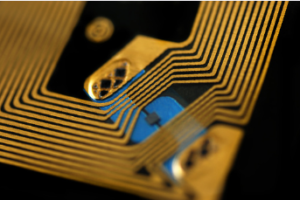 RFID tags are small devices with chips and antennas that communicate via radio waves with an RFID reader, making them suitable for various uses.
RFID tags have many uses, from inventory management and asset tracking to supply chain administration, product authentication, and brand protection.
RFID tags Australia offer a much greater depth of data for an individual item than barcodes, including its description, location in the system, history and any recall issues.
Some tag information can be read and saved on a computer, while other data can only be accessed when scanning the tag. It allows users to monitor what product they’re working with while increasing productivity if many items are involved.
Food industry workers frequently utilise tags like these to store information about products and regularly update it as the item moves through the supply chain or production line.
Information gathered can help improve supply chain efficiency, reduce costs, and provide necessary safety details to consumers, such as whether an item was recalled or manufactured.
Select an RFID tag compatible with existing readers and infrastructure to ease the transition and ensure the security of your data. It may make the changeover simpler and less risky for all parties involved.
Passive readable tags
Passive RFID tags Australia can be utilised in a wide variety of applications, particularly those with no battery requirement and only needing one read is necessary. In addition, they typically feature small sizes, long lifespans (20+ years), and affordable pricing structures.
Track and identify assets like cases of goods, tools or vehicles without making the trip back home every week. They also monitor temperature variations during transport or storage and track potency or expiration dates on medications or pharmaceutical products.
Some passive RFID tags can record data on objects attached to them, including temperatures, pressure and relative humidity levels. Some can even come equipped with sensors to track motion, altitude acceleration or chemical changes allowing companies to make smarter decisions regarding their products.
Passive tags tend to be larger and bulkier than their active counterparts yet still offer greater range and memory capacity than more straightforward tags. Most often designed to operate between 865 MHz and 950 MHz frequencies.
Higher frequencies tend to have shorter wavelengths and, therefore, greater read ranges, making them ideal for applications requiring long degrees, like race timing and electronic road toll collection, but less suitable for tasks requiring shorter distances, like asset tracking or file storage.
Passive RFID tags differ from active ones because they don’t contain microchips for communicating with readers; instead, they use an antenna and integrated circuit (IC) to transmit data. When an RFID reader reads them, its radio waves power the IC until it sends back its signal as a backscatter to the reader.
Passive RFID tags are widely used in many applications, such as parking lot access control systems or personnel security at gated communities. With no battery requirements and moving slowly, passive tags provide fast reads with accurate readings in a short period.
High-frequency readable tags
High-frequency readable tags (HFRTs) are an RFID technology that uses radio waves to transmit data faster than their passive counterparts and store more memory; additionally, these high-frequency tags can withstand more rigorous environments than their low-frequency counterparts.
These tags can be used to track livestock, pets or endangered animals. In addition, they can also be utilised in security access systems and for various applications that require very short read distances – for instance, mitigating electronic eavesdropping.
RFID tags come in four main frequency ranges, depending on their intended use: microwave (HF), ultra-high frequency (UHF), low frequency (LF) and high frequency (HF). Deliberation over which frequency best suits each tag’s purpose and the system and materials used is crucial in selecting an effective frequency range.
HF tags can be utilised in applications including credit and smart cards, security systems and near-field communication (NFC) technologies. Their frequency band ranges between 3 MHz to 30 MHz for reading distances ranging from 10 cm to 1 m.